


No products in the cart.
How Much Does a Paver Patio Cost in the Lower Mainland? (2026 Pricing Guide)
In the Lower Mainland, a professionally installed paver patio typically costs around $18 to $35 per square foot in 2026, while premium natural stone, complex layouts, difficult access, or extensive site preparation can push the price above that range. A 300-square-foot patio may therefore cost roughly $5,400 to $10,500, depending on the materials and conditions of the property.
If you’re planning a patio in New Westminster, Delta, or another Lower Mainland community, the per-square-foot price is useful for budgeting, but it is not the whole story. Excavation, drainage, base preparation, access, paver selection, pattern, and the condition of the existing yard can all significantly change the final quote.
This guide breaks down what you can expect to pay in 2026 and what to look for when comparing patio installation quotes.
What Affects Paver Patio Pricing?
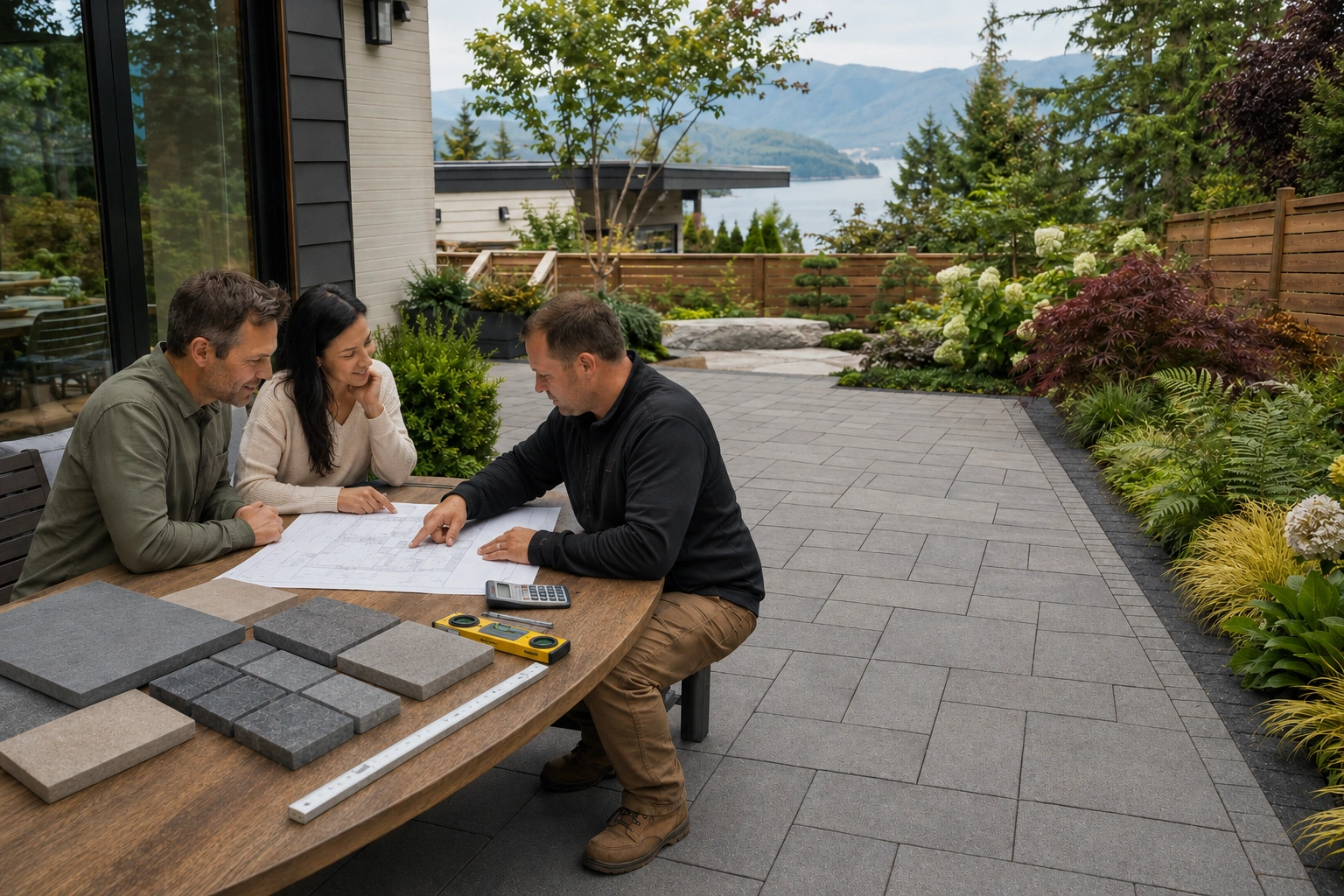
Two patios with exactly the same square footage can have very different installation costs.
A simple 300-square-foot rectangle on an accessible, level site is considerably easier to build than a 300-square-foot patio requiring excavation, drainage improvements, multiple levels, curved edges, and material to be carried through a narrow side yard.
Here are the main factors that influence the price.
Paver Material
The type of paver you choose is one of the most obvious cost factors.
Standard concrete pavers
Concrete pavers are one of the most common choices for residential patios. They are available in numerous shapes, colours, textures, and patterns, allowing homeowners to create anything from a simple modern patio to a more traditional design.
They generally provide a good balance between cost, durability, and design flexibility.
Premium or textured pavers
Large-format, textured, premium-finish, or specialty pavers can increase the material cost.
They may be worthwhile if appearance is a major priority, particularly when the patio is intended to function as an extension of the home’s main living space.
Natural stone
Natural stone such as flagstone can create a more distinctive, organic appearance, but material selection and installation can make it considerably more expensive.
For comparison, published Lower Mainland estimates place natural stone and premium patio materials at the upper end of typical installation ranges.
The best material is not necessarily the cheapest one. Consider how the patio will be used, how much maintenance you are comfortable with, and how you want the finished landscape to look.
Patio Size and Shape Complexity
Size matters, but bigger does not always mean a proportionally higher cost per square foot.
Larger projects can sometimes benefit from installation efficiencies. However, a large patio still requires more materials, excavation, base preparation, and labour overall.
Shape also matters.
A simple rectangular patio is generally easier to install than one with:
- Multiple curves
- Angled edges
- Several sections
- Contrasting borders
- Intricate patterns
- Steps
- Integrated planting areas
- Retaining walls
For example, a straightforward running-bond pattern may take less time to install than a detailed pattern with multiple paver sizes.
Site Preparation
This is one of the most important parts of a paver patio project.
A patio should not simply be installed directly on top of existing grass or soil.
Depending on the site, preparation can involve:
- Removing grass, soil, or an existing surface
- Excavating to the required depth
- Addressing unsuitable soil
- Installing and compacting the aggregate base
- Establishing the correct grade
- Installing drainage where necessary
- Preparing the bedding layer
- Installing edge restraints
- Laying and compacting the pavers
- Filling the joints
A patio that looks inexpensive because the pavers themselves are inexpensive can become much more costly once substantial excavation or base work is required.
Drainage Requirements
Drainage is particularly important in the Lower Mainland because patios need to handle significant rainfall.
The finished surface needs to direct water away from structures and prevent water from collecting beneath or around the patio.
If your yard already has drainage problems, the patio project may need to include additional drainage measures.
That might involve grading changes, channel drains, catch basins, or a broader drainage system.
Solving the drainage problem during patio construction can be much more practical than installing a new patio and discovering later that water is pooling around it.
Access to the Property
Contractors also need to consider how materials and equipment will reach the installation area.
A backyard with easy access from a driveway may be relatively straightforward.
A property with a narrow side passage, stairs, fencing, or limited equipment access can require considerably more manual labour.
This is one reason an on-site assessment is more useful than relying solely on an online price calculator.
How Much Does a Paver Patio Cost by Size?
The following ranges provide a useful 2026 budgeting guide for professionally installed patios in the Lower Mainland. They are estimates rather than fixed quotes because every site has different requirements.
| Patio Size | Approximate Installed Cost* | Typical Use |
| 100 sq ft | $1,800–$3,500 | Small seating area |
| 200 sq ft | $3,600–$7,000 | Compact backyard patio |
| 300 sq ft | $5,400–$10,500 | Standard entertaining area |
| 500 sq ft | $9,000–$17,500 | Larger outdoor living space |
| 800+ sq ft | $14,400–$28,000+ | Large or multi-zone patio |
*These are planning ranges based on published 2026 Lower Mainland pricing and should not be treated as a project quote. Premium materials, difficult access, extensive excavation, drainage work, retaining walls, complex patterns, or additional features can increase the total.
How Much Does a 200 Sq Ft Paver Patio Cost?
A 200-square-foot paver patio may cost approximately $3,600 to $7,000 installed using the general 2026 Lower Mainland range of $18 to $35 per square foot.
A simple patio with standard concrete pavers and good site access may fall toward the lower end.
A project involving premium pavers, extensive excavation, drainage work, difficult access, or a complex pattern may be closer to the upper end.
Paver Patio vs. Concrete Slab vs. Natural Stone: Cost Comparison
Choosing a patio material involves more than comparing the initial price.
Here is a general comparison:
| Material | Typical Cost Position | Design Flexibility | Repairability | Best For |
| Concrete slab | Lower | Moderate | Lower | Simple, budget-conscious patios |
| Concrete pavers | Moderate | High | High | Flexible residential designs |
| Natural stone | Higher | High | Moderate | Premium, natural-looking landscapes |
Published Lower Mainland pricing guides commonly place standard concrete or paver patio installation around the $15–$35 per-square-foot range, with premium natural stone and more complex projects extending considerably higher.
Pavers vs. Concrete
A poured concrete patio can have a lower initial cost, particularly when the design is simple.
However, concrete behaves differently when the ground moves. Cracks can be difficult to repair without the repair being visible.
With interlocking pavers, individual units can generally be lifted and replaced if a section settles or becomes damaged.
That repairability is one reason many homeowners consider pavers worthwhile despite their potentially higher upfront price.
Pavers vs. Natural Stone
Natural stone generally offers a more organic and distinctive appearance.
However, the material and installation process can be more expensive, especially for premium stone and labour-intensive layouts.
Concrete pavers offer more consistency in size and shape, which can make installation more predictable while still providing numerous design options.
Are Pavers More Expensive Than Concrete?
Usually, yes. Interlocking pavers often cost more upfront than a basic poured-concrete patio, but they offer greater design flexibility and easier individual repairs. The long-term value depends on installation quality, site conditions, maintenance, and how important appearance and repairability are to the homeowner.
The cheapest initial option is not automatically the least expensive over the life of the patio.
Think about the entire installation rather than only the surface material.
A properly prepared base and drainage system can have a greater impact on the patio’s long-term performance than choosing between two similar paver products.
Ways to Manage Paver Patio Costs Without Sacrificing Quality
You do not necessarily need to choose the cheapest material to control your budget.
Instead, focus on reducing unnecessary complexity while keeping the underlying construction sound.
1. Keep the layout simple
Straight edges and simple shapes are generally more efficient than highly complex designs.
If your budget is limited, spend money on good site preparation rather than unnecessary decorative details.
2. Choose a standard paver
Premium pavers can look excellent, but standard concrete pavers are available in many attractive styles.
Ask your contractor to show you several options at different price points.
3. Avoid unnecessary demolition
If the existing surface can be properly incorporated or removed efficiently, you may be able to reduce some labour costs.
However, never keep an unsuitable base simply to save money. The patio needs a stable foundation.
4. Plan drainage at the beginning
Adding drainage after the patio is finished can be more disruptive than incorporating it into the original design.
If your property has standing water or grading problems, address those conditions as part of the project.
5. Consider the size carefully
Do you really need the entire yard paved?
A smaller, well-designed patio surrounded by planting beds can sometimes provide a better outdoor space than a large paved area.
Use hardscaping where it serves a purpose.
6. Compare itemized quotes
Do not compare contractors based solely on the final dollar amount.
Ask each contractor what is included.
A quote should ideally identify major components such as:
- Excavation
- Disposal
- Base material
- Compaction
- Drainage
- Pavers
- Edge restraints
- Jointing material
- Labour
- Additional structures or features
Two quotes with different prices may actually represent different scopes of work.
What Should You Ask Before Hiring a Paver Patio Contractor?
Before accepting a quote, ask:
Is excavation included?
Find out how much material will be removed and how disposal is handled.
What type of base will be installed?
A quality patio depends on a properly prepared and compacted base.
How will water drain?
The contractor should be able to explain how surface water will move away from the patio and nearby structures.
What paver product is included?
Get the manufacturer, product line, size, colour, and pattern where possible.
Are edge restraints included?
Proper edge restraint helps prevent lateral movement of the pavers.
What happens if the patio settles?
Ask about the contractor’s workmanship warranty and what is covered.
Are additional costs possible?
A detailed quote should explain what circumstances could result in additional charges.
Does a Paver Patio Increase Home Value?
A professionally designed patio can improve a home’s outdoor appeal and functionality, but it is difficult to promise a specific return on investment.
The value comes from several factors beyond the patio’s construction cost.
A well-designed outdoor area can:
- Improve curb and backyard appeal
- Create additional entertaining space
- Make the property more functional
- Complement landscaping and hardscaping
- Improve the overall presentation of the home
However, homeowners should be cautious about claims that a patio will automatically return a specific percentage of its cost in increased property value.
The benefit depends on the local market, quality of the installation, design, property condition, and buyer preferences.
Why Choose Pavers for a Lower Mainland Patio?
The Lower Mainland’s wet climate makes drainage and proper base preparation especially important for outdoor hardscaping.
A professionally installed paver patio should be designed as a complete system rather than simply a layer of attractive stones.
The goal is to create a surface that:
- Sheds water effectively
- Remains stable under normal use
- Complements the home’s architecture
- Fits the property’s grading
- Can be maintained over time
- Allows practical repairs if needed
Yoho Landscaping provides paver installation Burnaby and design services as part of its landscaping and hardscaping work. The company’s service offering includes paver patios and other outdoor improvements designed around the property and the homeowner’s goals.
For a larger project, pavers can also be coordinated with other elements such as retaining walls, natural stone features, drainage, pathways, and planting.
That can help create a more cohesive landscape rather than treating the patio as a standalone feature.
Frequently Asked Questions
How much does a 200 sq ft paver patio cost?
A 200-square-foot professionally installed paver patio in the Lower Mainland may cost approximately $3,600 to $7,000 in 2026, using a general range of $18–$35 per square foot. Actual pricing can vary based on paver material, excavation, drainage, access, design complexity, and site conditions.
Are pavers cheaper than concrete?
Basic poured concrete is generally less expensive upfront than interlocking pavers. However, pavers offer greater design flexibility and allow individual units to be replaced, which can be an advantage when repairs are needed. The better option depends on your budget, design preferences, site conditions, and long-term priorities.
Do paver patios increase home value?
A well-designed paver patio can improve outdoor functionality and property appeal, but there is no guaranteed percentage increase in home value. The quality of the installation, overall landscape design, local market, and condition of the property all influence the potential benefit.
How long does a paver patio installation take?
A straightforward patio can often be completed within several working days, but the timeline depends on the size, excavation requirements, weather, access, drainage work, material availability, and design complexity. Projects involving significant grading, retaining walls, or drainage improvements can take longer.
Get an Accurate Paver Patio Cost for Your Property
Online pricing ranges are useful for establishing a budget, but they cannot account for everything happening at your property.
A 300-square-foot patio with easy access and stable soil is a very different project from a 300-square-foot patio that requires excavation, drainage improvements, difficult material access, and a complex layout.
The best way to understand your actual paver patio cost in the Lower Mainland is to have the site assessed and receive an itemized quote.
Planning a new patio in Burnaby, New Westminster, Delta, or the surrounding Lower Mainland? Contact Yoho Landscaping for a consultation and request a detailed, project-specific quote.