

Residential Landscape Design vs. Garden Design: What’s the Difference?
In a residential landscape design vs garden design comparison, landscape design plans the entire outdoor property, including patios, pathways, drainage, retaining walls, grading and planting areas. Garden design focuses more closely on plants, garden beds, colour and seasonal appearance. Choose landscape design for structural or full-property changes and garden design when the existing layout already works.
Both services can be valuable, but they solve different problems. Understanding the difference can help you search for the right professional, create a clearer budget and avoid paying for a plan that does not cover the full scope of your project.
What Is Residential Landscape Design?
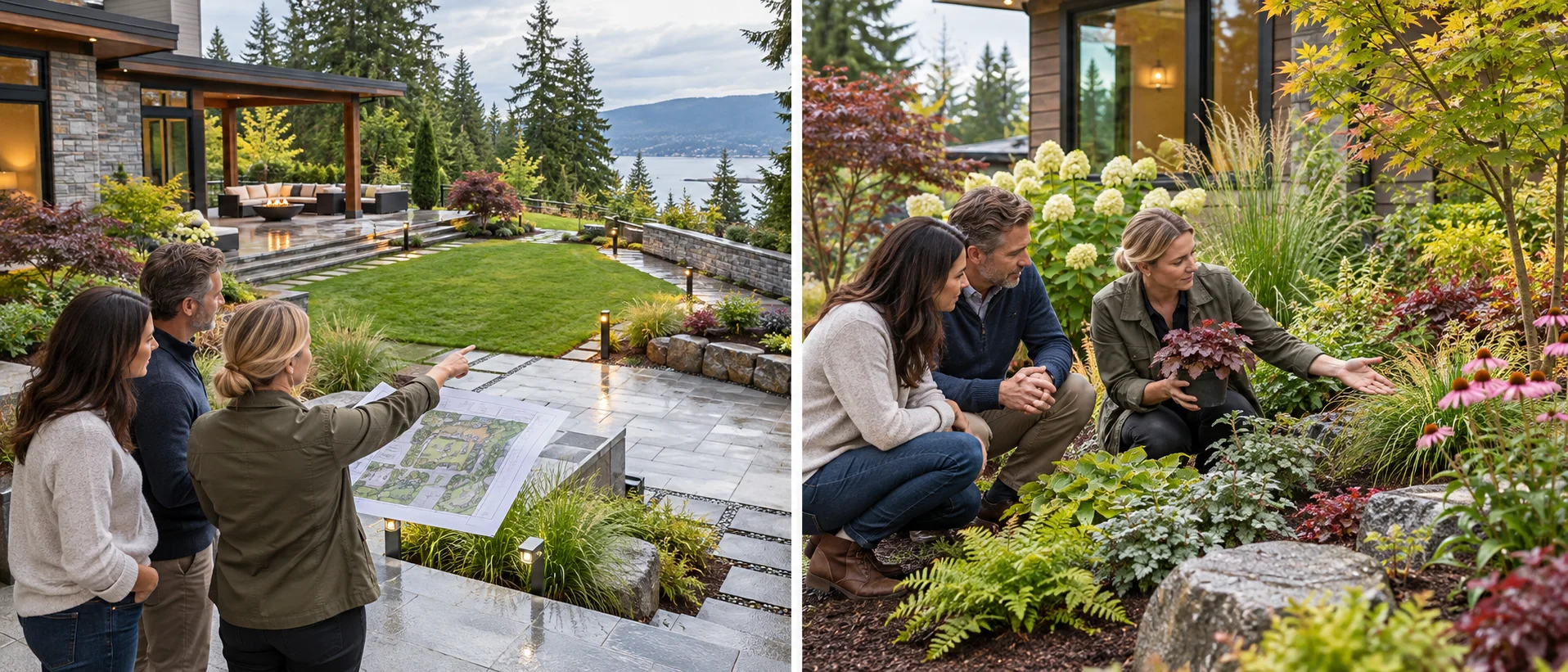
Residential landscape design creates a coordinated plan for the whole outdoor property. It considers how people move through the space, how water drains, where structures should be installed and how each area connects to the home.
A landscape designer may plan:
- Patios and outdoor living areas
- Paver walkways and entrances
- Driveways and parking areas
- Retaining walls
- Steps and elevation changes
- Grading and drainage
- Garden beds and planting areas
- Lawn or open-use areas
- Privacy screening
- Irrigation
- Lighting locations
- Future additions
The process begins with the property itself. The designer considers the size, grade, soil, access, existing structures, drainage patterns and how the homeowner wants to use the space.
For example, a Burnaby backyard with a steep slope may need a retaining wall before a patio or garden can be planned. A low section of a New Westminster property may require drainage work before new planting beds are installed.
Residential landscape design also considers construction order. Drainage, excavation and retaining walls usually need to be addressed before pavers, soil and plants are installed.
This broader planning can prevent conflicts between features. A patio should not block a drainage route, and a garden bed should not direct water towards the foundation or place large roots too close to a wall.
Landscape design is generally the better choice when the project includes hardscaping, drainage or major changes to the layout. It helps turn several separate ideas into one practical plan.
What Is Garden Design?
Garden design concentrates on the planted parts of an outdoor space. It focuses on how garden beds look, which plants will grow successfully and how the garden will change throughout the year.
A garden designer may help with:
- Plant selection
- Garden bed shapes
- Seasonal colour
- Plant height and spacing
- Shade and sunlight requirements
- Soil improvement
- Pollinator-friendly planting
- Privacy planting
- Containers and decorative pots
- Mulch and garden edging
- Replacing overgrown or unhealthy plants
Garden design normally works within an existing layout. The patio, pathways, retaining walls and overall grade may already be in place, while the homeowner wants to refresh the planting around them.
A good garden plan considers more than flower colour. It should account for sunlight, moisture, mature plant size, maintenance needs and how the plants will look in different seasons.
This is especially important in the Lower Mainland, where wet winters and dry summer periods can affect plant performance. A garden that looks attractive on installation day should also have enough space to grow without blocking windows, paths or entrances later.
Garden design may be the right choice when the outdoor space functions well but looks bare, dated or difficult to maintain. It can improve the appearance of a front entrance, border, courtyard or established backyard without changing the property’s structure.
Which One Do You Need?
Choose the service according to the type of problem you need to solve. If you are changing how the property works, start with residential landscape design. If the existing layout works and the main concern is planting, garden design may be enough.
Use this decision guide:
- Choose residential landscape design for a new build. A complete plan can coordinate grading, drainage, access, patios, walls and planting before construction begins.
- Choose residential landscape design for a backyard overhaul. This is suitable when you want to replace several elements or create a completely different layout.
- Choose residential landscape design for drainage problems. Water movement should be understood before new hardscape or garden features are installed.
- Choose residential landscape design for a sloped property. Retaining walls, steps, terraces and drainage need to work together.
- Choose residential landscape design for a new patio or walkway. The plan should consider dimensions, traffic flow, material selection and surrounding grades.
- Choose garden design to refresh established beds. This works when the bed locations are suitable but the plants need to be replaced or reorganised.
- Choose garden design for seasonal colour. A planting plan can coordinate bloom periods, foliage and year-round interest.
- Choose garden design for a low-maintenance planting update. The designer can recommend plants suited to the available space and desired level of upkeep.
- Choose garden design for a small entrance or courtyard. A focused planting plan may be enough when no structural work is required.
Homeowners in Burnaby, New Westminster and Delta should also consider whether the visible garden problem has an underlying cause. Plants struggling in a wet bed, for example, may indicate that drainage should be corrected before the area is replanted.
Can Residential Landscape Design and Garden Design Be Combined?
Yes. Many full landscaping projects combine both services because structural features and planting need to support one another.
Residential landscape design establishes the main framework. It determines where patios, walkways, retaining walls, drainage systems and planting areas should be located.
Garden design then develops the planted areas within that framework. It chooses plants, spacing, colours and seasonal combinations that suit the completed layout.
At Yoho Landscaping, we look at the whole property before recommending improvements. We consider access, slope, drainage, existing hardscape and how the homeowner wants to use the outdoor space.
If a Delta property needs better drainage, a retaining wall and refreshed planting, those elements should be planned as one connected project. Building the garden first could result in plants being disturbed when excavation begins later.
The same principle applies to a Burnaby patio renovation or a compact New Westminster yard. Planning the hardscape and garden together helps ensure that paths are wide enough, beds have appropriate space and water moves away from structures.
Combining the two services can also make the finished property feel more consistent. Materials, wall colours, paver patterns and plants can be selected as parts of one design instead of separate additions.
Frequently Asked Questions
Do I need a landscape designer or a landscaper?
A landscape designer plans the layout, materials, drainage, structures and planting areas. A landscaper carries out the physical work, such as excavation, grading, wall construction, paving and planting. For a larger project, look for a company that can connect the design with practical installation requirements.
How much does residential landscape design cost in Burnaby?
The cost depends on the property size, design detail and whether the service includes measurements, drawings, material selections or revisions. Construction is normally priced separately. Request a written quote that explains exactly what the design fee includes and whether any portion is credited towards installation.
Can garden design be part of a larger landscaping project?
Yes. Garden design can be included alongside patios, paths, retaining walls, drainage and other property improvements. Planning the plants with the hardscape helps create suitable bed sizes, manage water properly and ensure that mature plants will not interfere with structures or access.
Final Thoughts
Residential landscape design plans how the whole property will function, while garden design focuses on the planted areas and their appearance. Smaller planting updates may only need garden design, but projects involving drainage, walls, paving or major layout changes benefit from a complete landscape plan.
If you are unsure which service suits your Burnaby, New Westminster or Delta property, contact Yoho Landscaping to arrange a free design consultation and discuss the goals, conditions and practical needs of your outdoor space.


