

Eco-Friendly & Drought-Resistant Landscaping Ideas for Lower Mainland Yards
Eco-friendly landscaping reduces water use, supports healthy soil, manages rainwater responsibly, and uses durable materials and plants suited to local conditions. In the Lower Mainland, drought-resistant landscaping does not mean replacing every plant with gravel. It means designing a yard that handles wet winters and increasingly dry summers without demanding constant watering or maintenance.
For homeowners researching eco-friendly landscaping Burnaby, the most effective approach combines drought-tolerant plants, efficient irrigation, permeable surfaces, mulch, and properly designed drainage. The result can be an attractive, practical yard that uses resources more carefully.
Why Drought-Resistant Landscaping Makes Sense in BC
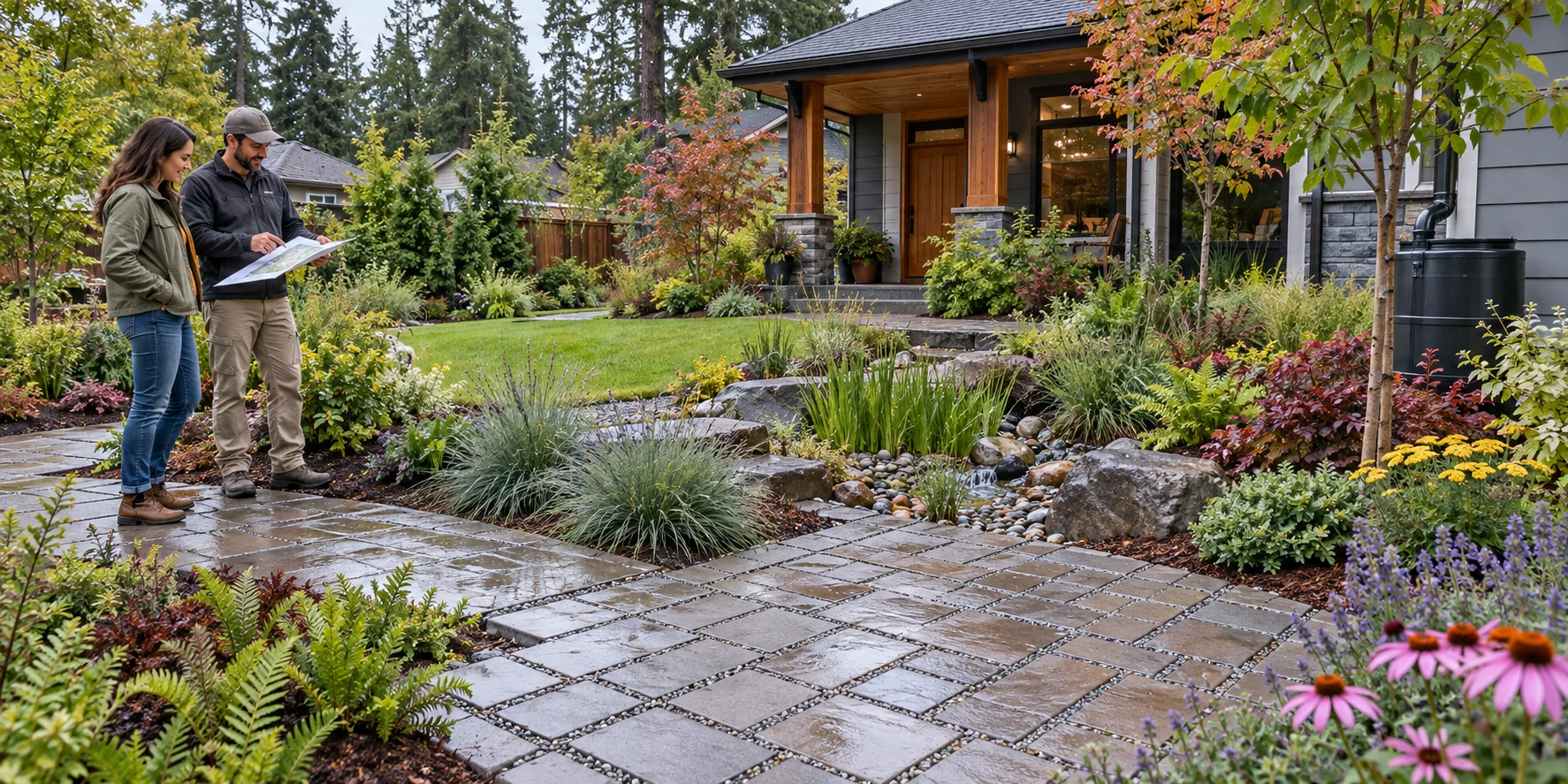
The Lower Mainland is known for rain, but much of that rain arrives during fall and winter. Gardens can still experience long dry periods during summer, especially in sunny or exposed yards.
Metro Vancouver’s Stage 1 watering restrictions automatically apply from May 1 to October 15. During this period, lawn watering is limited to designated days and times. More restrictive stages may be introduced during unusually hot or dry conditions.
A drought-resistant yard makes it easier to work within these limits. Once suitable plants have established their root systems, they generally need less supplemental watering than plants selected for consistently moist conditions.
Other practical benefits include:
- Less time spent watering and maintaining thirsty garden beds
- Lower seasonal water use
- Fewer stressed or failing plants during hot weather
- Reduced need to replace plants that do not suit the site
- Better soil protection when mulch and groundcovers are used
- A garden that remains visually appealing through summer
Good drought-resistant landscaping BC homeowners can depend on begins with the site. Sun exposure, soil, slope, drainage, and available planting space should all guide plant and material choices.
Best Drought-Tolerant Plants for Lower Mainland Gardens
The best plant is not simply the one labelled “drought tolerant.” It must also suit the amount of sunlight, soil drainage, available space, and exposure in your yard.
Metro Vancouver’s Grow Green Guide recommends non-invasive plants based on the region’s climate, while UBC highlights Oregon grape, evergreen huckleberry, and red-flowering currant as attractive drought-tolerant choices.
Consider these plants as a starting point:
- Kinnikinnick
This low-growing evergreen groundcover works well on sunny slopes, along pathways, and in dry planting areas. It can help cover exposed soil once established. - Tall Oregon grape
A native evergreen shrub with glossy foliage and yellow spring flowers, Oregon grape tolerates a range of light conditions and provides year-round structure. - Red-flowering currant
This native shrub produces colourful spring flowers and can perform well with less summer water after its root system is established. - Evergreen huckleberry
A useful option for partially shaded gardens, evergreen huckleberry offers year-round foliage and works naturally in woodland-style planting designs. - Common yarrow
Yarrow is a sun-loving perennial with flat flower clusters. It handles dry conditions well and can attract pollinators. - Nodding onion
This compact native perennial produces distinctive pink flower clusters. It suits sunny garden edges and other well-drained locations. - Kinnikinnick stonecrop
Native stonecrops have fleshy leaves that store moisture. They work well in rock gardens, between larger stones, and in hot, shallow planting areas. - Lavender
Lavender is not native to BC, but it can be a practical low-water choice for sunny areas with excellent drainage. It does not perform well in waterlogged soil.
Even drought-tolerant plants need regular watering while becoming established. Group plants with similar light and moisture needs so one irrigation zone does not overwater some plants while leaving others dry.
Eco-Friendly Hardscape Choices
Hardscaping influences how water moves across your property. Large, solid surfaces can direct runoff toward low areas, foundations, neighbouring properties, or municipal storm drains if the grade and drainage have not been planned carefully.
Permeable Pavers
Permeable paving systems allow water to enter specially prepared joints and base layers instead of immediately running across the surface. They can be considered for patios, pathways, and some driveway applications where site conditions permit.
Metro Vancouver recommends alternatives such as grass pavers, gravel, mulch, and previous concrete to help water soak into the ground and reduce runoff entering storm drains.
A permeable surface still requires proper excavation, base preparation, grading, and overflow planning. Simply leaving wider gaps between ordinary pavers does not automatically create a reliable permeable system.
Proper Drainage Systems
An eco-friendly yard must handle both summer dryness and winter rainfall. French drains, drain tile, catch basins, grading, and channel drains can help manage water, but each solves a different problem.
A French drain generally collects water moving through saturated soil. A catch basin or channel drain captures visible surface runoff. Our drainage solutions are planned around the source of the water, the property’s slope, and a suitable discharge route.
Capturing or redirecting excess rainwater can protect planting areas and hardscaping. However, drainage should not move a problem from one part of the property to another.
Natural Stone And Manufactured Materials
Natural stone can create long-lasting patios, pathways, garden borders, and landscape features. Its colour and texture also fit naturally into many West Coast yards. You can explore our natural stone landscaping services for examples of practical stone applications.
Manufactured pavers offer consistent sizes, predictable installation patterns, and a wide choice of colours. Neither option is automatically the most sustainable in every project. Consider material lifespan, transportation, repairability, installation requirements, and whether existing materials can be reused.
Water-Smart Irrigation Tips
A water-wise garden still needs a watering plan, especially during its first few seasons. The goal is to deliver water where it is needed without losing large amounts to pavement, wind, or evaporation.
Use Drip Irrigation
Drip irrigation delivers water close to plant roots. Separate sunny beds from shaded areas, and place plants with similar water needs on the same irrigation zone.
Check the system throughout summer. A blocked emitter, damaged line, or incorrect timer setting can leave one plant dry while wasting water elsewhere.
Add Mulch To Planting Beds
A layer of organic mulch helps shade the soil, reduce evaporation, limit weed growth, and protect soil from heavy rain. Leave space around plant stems and tree trunks rather than piling mulch directly against them.
Mulch breaks down over time, so inspect it periodically and replenish it when needed.
Create A Rain Garden
A rain garden is a shallow planted area designed to receive and temporarily hold runoff. It can slow water down and allow some of it to soak into the soil.
The location and overflow route matter. A rain garden should not be placed where collected water could affect a foundation, retaining wall, or neighbouring property.
Water Deeply During Establishment
New plants usually need more attention than established ones. Slow, thorough watering encourages roots to move deeper into the soil, while frequent shallow watering can keep roots close to the surface.
Follow current municipal restrictions and adjust irrigation when rainfall provides enough moisture.
How Yoho Landscaping Plans Sustainable Lower Mainland Yards
At Yoho Landscaping, we consider the whole property rather than treating plants, hardscaping, and drainage as separate issues. We look at sunlight, grading, soil, water movement, access, intended use, and the amount of maintenance the homeowner wants.
That approach can support practical eco-friendly landscaping Burnaby homeowners can enjoy throughout the year. We also work with properties in New Westminster and Delta, where soil conditions, yard layouts, and drainage concerns can differ from one site to another.
Frequently Asked Questions
Is drought-resistant landscaping more expensive upfront?
It can cost more initially if the project includes soil improvement, irrigation changes, drainage work, permeable paving, or the removal of an existing lawn. However, suitable plants and efficient watering may reduce ongoing water use, plant replacement, and maintenance. The long-term value depends on the design and installation quality.
What plants survive Lower Mainland summers with little water?
Kinnikinnick, Oregon grape, yarrow, nodding onion, red-flowering currant, evergreen huckleberry, native stonecrop, and lavender can be suitable choices. Every plant still needs the right light, soil, and drainage. Most also require consistent watering during establishment before becoming more drought tolerant.
Can I convert my existing lawn to a drought-resistant yard?
Yes. A lawn can be replaced gradually or as part of a complete renovation. Possible alternatives include drought-tolerant planting beds, mulched areas, native groundcovers, permeable pathways, patios, and small areas of climate-suitable turf. Check the grade and drainage before changing the surface.
Can a yard be drought resistant and still handle heavy rain?
Yes. A successful Lower Mainland landscape should address both conditions. Drought-tolerant planting reduces summer water demand, while proper grading, permeable surfaces, French drains, drain tile, or catch basins can help manage wet-season runoff.
If you want a yard that uses less water without sacrificing function or appearance, reach out to Yoho Landscaping for a site-specific consultation. We can help you combine planting, hardscaping, and drainage into a practical plan for your property.


